
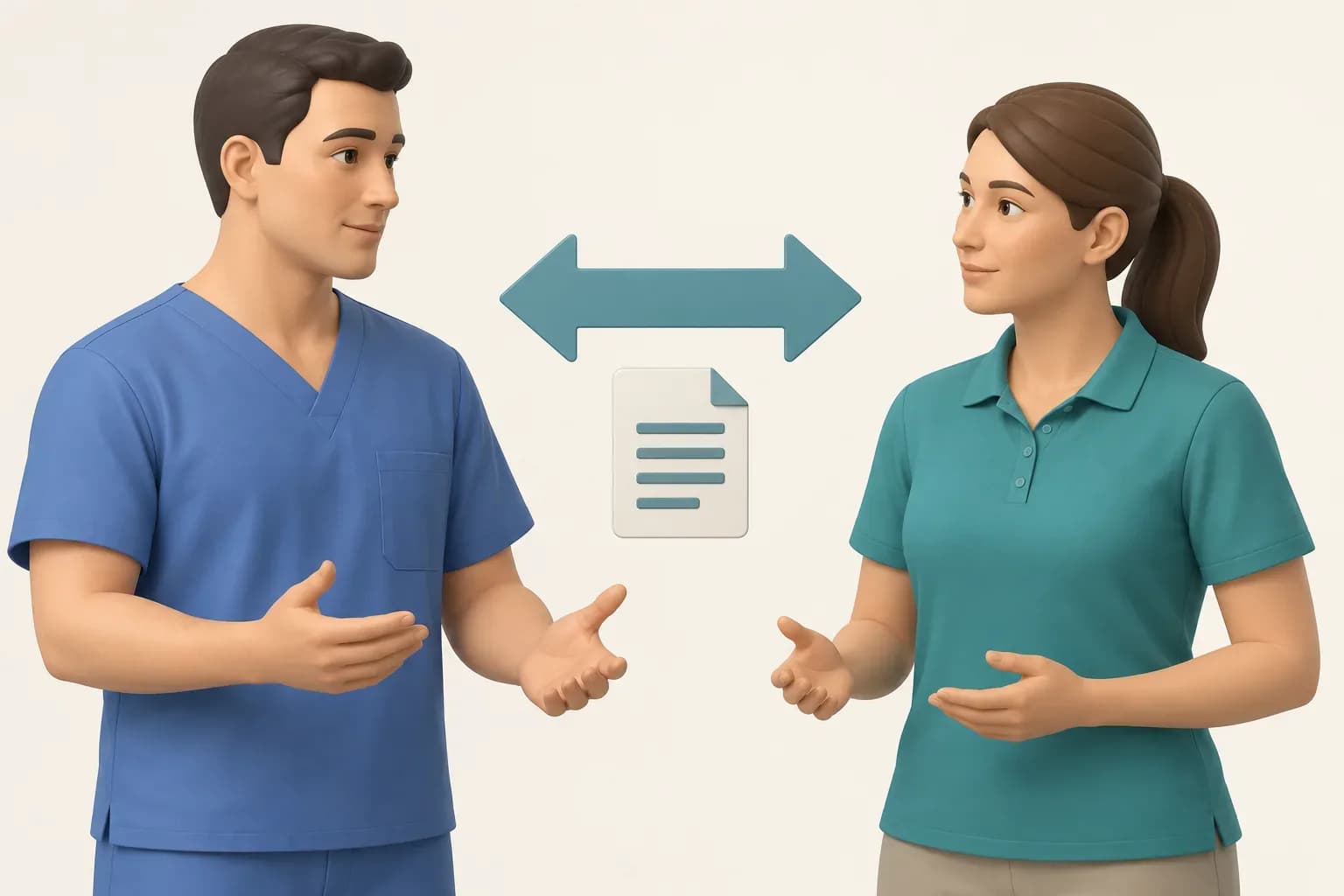
After SPML, a family needs more than the address of another centre. They need a coordinated plan covering the surgeon's restrictions, permitted activity, any orthoses and responsibility for follow-up. The operation's name alone does not answer these questions.
SPML is discussed as one orthopaedic option in cerebral palsy. This article helps families prepare questions for the surgeon and rehabilitation team. It does not establish surgical indications or provide a universal postoperative exercise programme.
What SPML means
SPML stands for selective percutaneous myofascial lengthening. It is an orthopaedic technique involving soft tissues through small incisions, discussed in relation to restricted movement and increased tissue tension.
It should not be confused with selective dorsal rhizotomy, or SDR. SDR is a neurosurgical intervention involving nerve roots. A shared aim of making movement easier does not make the operations interchangeable.
Check the exact procedure in the surgical report. “Minimally invasive surgery” can describe different interventions. Published SPML research concerns particular patient groups and surgical approaches; the name does not imply an identical operation for every child.
Read outcome claims carefully
Research may assess surgery together with subsequent physiotherapy and sometimes additional interventions. For example, a 2021 non-randomised study examined a combined approach. Its findings cannot automatically be attributed to SPML alone.
Who the study compares and how long it follows participants also matter. One family's account describes their experience, not the probability of the same outcome for another child. Statements such as “will definitely walk” or “one operation is enough” do not replace discussion of individual goals, risks and alternatives.
A small incision does not mean there is no risk or need for recovery. Before deciding, ask what the proposed procedure aims to change, which limitations may remain and why it is being considered now.
Make the discharge information useful to the next team
When care transfers to another centre, preserve the details of the intervention, not just its abbreviation. The receiving team needs clinical instructions relevant to the child's current stage.
Ask the surgeon about:
- the areas and tissues involved, and any additional procedures;
- postoperative care and follow-up arrangements;
- permitted activity and movement restrictions;
- whether orthoses or other supports are needed, and who selects them;
- whom to contact with questions or changes in the child's condition.
These are topics to agree, not a statement that every child needs the same restrictions or equipment after SPML.
Timing follows clinical instructions
Another family's account or an available place at a centre cannot determine when full activity should begin. Restrictions depend on the actual intervention and the child's condition. Additional procedures may also affect the plan.
Before booking travel, arrange the transfer of instructions between the surgeon and receiving practitioners. If recommendations differ, the family needs a coordinated answer from the teams. A more intensive option should not be chosen independently because a stay has already been paid for.
The same applies at home. A session video does not replace written restrictions or make an exercise appropriate at every stage of recovery. Movements, adult assistance and ways of getting around need individual discussion.
Discuss progress through specific goals
Start with tasks that matter to the child: comfortable positioning, available ways of moving and participation in familiar activities. Reduced restriction and learning a new action are different outcomes and should be distinguished.
The team needs to understand abilities before surgery and subsequent changes. Repeated observations should be comparable. Describing a specific action and the conditions in which it is performed is more useful than saying only that things are “better”. Professionals choose the assessment approach; this article does not ask parents to score a clinical scale themselves.
Clarify who brings together information from the surgeon and rehabilitation practitioners, and who explains the next plan. This matters particularly when surgery and rehabilitation take place in different institutions or countries.
Choosing a centre abroad
Comparing countries becomes useful only after examining the actual care pathway. A country's name does not identify who will supervise recovery, which instructions the team can accommodate or how they will communicate with the surgeon.
Before travelling, confirm whether the centre can consider admission after the specific procedure, agree how to send the discharge report and clarify medical support. An advertisement mentioning SPML does not establish that surgery is performed there or that every postoperative case is accepted.
Enquiring about the People's Hospital
If you are considering Yuncheng People's Hospital for further rehabilitation, first ask the coordinator whether your child's case can be considered and how to share the surgeon's instructions. This article does not establish that the hospital performs SPML or accepts children at every postoperative stage.