
If needle-knife therapy is proposed for a child with cerebral palsy, first establish exactly what intervention is being offered and what it is intended to change. The name does not explain which tissues will be treated, why this approach was chosen or how the outcome will be assessed. A promise to “reduce spasticity” also does not explain whether moving or personal care will become easier for the child.
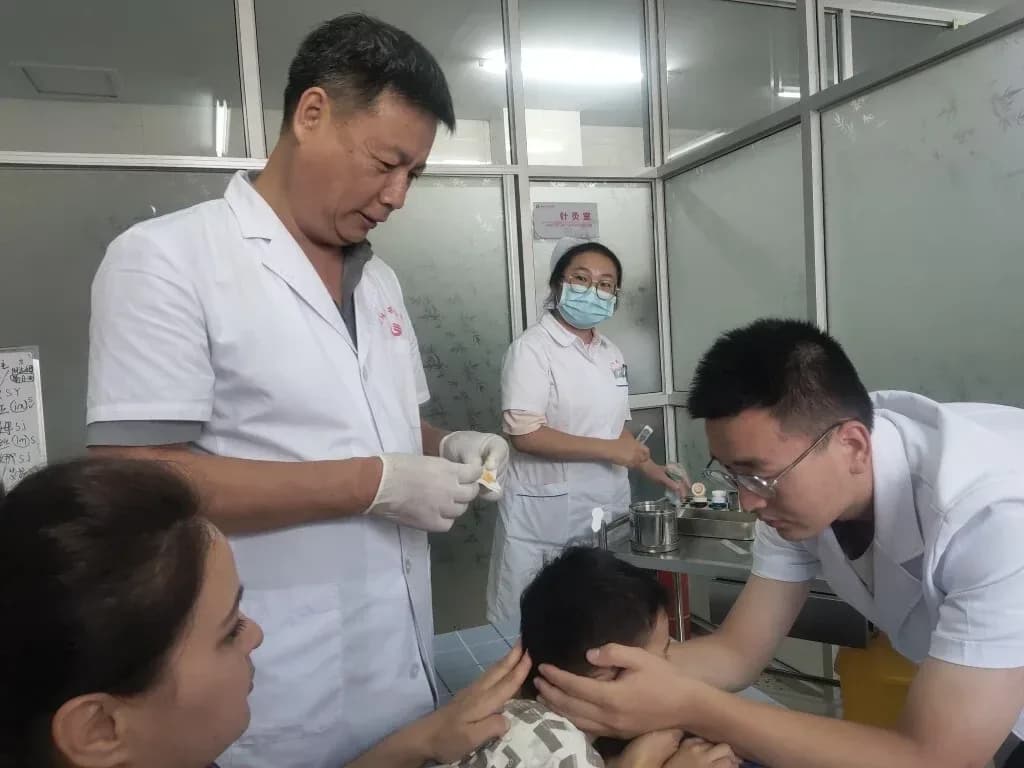
The Needle-Knife Therapy page explains how Yuncheng People's Hospital describes the procedure, with photographs and answers to common questions. This article focuses on what to clarify when seeking help for a child with spasticity and how to discuss the expected outcome.
How Yuncheng People's Hospital describes needle-knife therapy
Search results use several names, including needle-knife and acupotomy. Do not assume that every publication using one of these terms describes the intervention being offered to your family.
The hospital's procedure page refers to an instrument with a flat, blade-like tip and identifies areas of the head as treatment sites. That description is insufficient to equate it with an intervention on soft tissues in a limb for a contracture. It also does not justify transferring the results of any acupotomy study to the proposed procedure.
Ask the doctor to explain the exact method, treatment area and intended action. Clarify how it differs from ordinary acupuncture: what will the instrument do, and why is that considered appropriate for the child? The answer should describe the intervention itself, beyond its promotional name.
Spasticity and contracture involve different questions
With spasticity, muscles show increased resistance when another person moves a limb; that resistance depends, among other factors, on movement speed. A contracture limits joint movement because muscles and other soft tissues have shortened. NICE guidance on spasticity in children distinguishes these terms.
At an assessment, it is therefore useful to clarify what “the leg is tight” means. Is increased tone, an established restriction in movement or a combination of problems making movement difficult? What does the doctor intend to change? A similar-looking limb position should not automatically lead to the same procedure.
Link the goal to the child's life: for example, discuss ease of dressing, foot position when using support, or discomfort during care. These are examples of questions, not promised outcomes of needle-knife therapy.
What a study can tell you — and what it cannot
A 2006 study by Yan and colleagues included 105 patients with spastic cerebral palsy. The authors compared acupotomy, physical therapy and their combination. Muscle tone was assessed before treatment and one month later using the Modified Ashworth Scale.
The authors reported greater changes in tone in the groups receiving acupotomy. However, that assessment does not answer questions about lasting benefit, everyday skills or correction of a contracture in an individual child. The available abstract does not provide enough detail to establish that the intervention matches the one offered by a particular clinic.
This distinction is useful when reading testimonials: “the muscle feels softer”, “the joint moves more freely” and “the child can perform a new task” describe different outcomes. Ask which outcome was measured and what supports a connection with the procedure. A testimonial or a short video cannot estimate the likelihood of benefit for another family.
Preparation, pain relief and contraindications
Before consenting to an invasive procedure, a family needs an understandable plan. Duration, session numbers and pain relief should be clarified for the particular intervention; another child's course is not a prescription.
Discuss with the doctor:
- what information about health, medicines and previous interventions should be provided;
- which contraindications apply to the proposed procedure;
- how blood-clotting problems, skin conditions and reactions to medicines are considered;
- how pain relief and observation are arranged, and what happens if the child experiences substantial discomfort;
- which unwanted effects are possible and whom to contact about changes after a session.
This list supports a conversation; it does not replace medical assessment. The doctor decides whether to proceed after examining the child. Also ask about alternatives and how the care plan would change if the family declined the intervention.
A rehabilitation plan matters whichever procedure is considered
NICE recommends individually tailored physical therapy for children with spasticity, with specific goals and regular reassessment. This is guidance on spasticity management, not evidence that needle-knife therapy is effective.
If an intervention is being considered, agree which activities will continue, what restrictions will apply and who will review the level of activity. Establish in advance when and how changes will be assessed. Do not independently intensify stretching or restart exercises based on a video of someone else's session.
When contacting Yuncheng People's Hospital, first ask whether the case can be considered and request a description of the proposed method to discuss with the child's treating doctor. The existence of a procedure page does not establish eligibility or confirm admission for a particular course.